



Having considered the inspiration and canonization of Scripture, it is necessary to examine its transmission throughout history. The prophets and apostles wrote the various books of the Bible long before the invention of the printing press or any mechanical means of reproduction. The question, then, is how these ancient writings have been preserved and passed down to us today.
This, once again, is a story of divine providence. Even in ordinary experience, documents can be lost despite multiple safeguards and backups. Yet portions of the biblical text, some of which were written more than three thousand years ago, remain widely available and accessible.
To state the matter plainly, the original writings of Scripture, known as the autographs, no longer exist. Not a single document penned by the biblical authors has survived. This raises an important question: Why did God not preserve the autographs? He could have ensured their survival. He could have had them inscribed on more durable materials, such as stone or metal. Instead, he ordained that his Word be written on fragile materials such as papyrus, thereby requiring continual hand-copying.
This reality is significant, particularly in light of the history of scribal transmission. As will be seen, scribes made numerous errors in copying the biblical text. Some deny this, preferring to believe that God preserved a perfectly unbroken line of manuscripts untouched by human fallibility. Others, upon learning of these scribal variations, find their confidence in Scripture unsettled. Yet the historical process, with all its apparent disorder, unfolded according to divine intention.
God did not preserve the autographs. He permitted them to pass from history and entrusted the transmission of his Word to fallible human agents. This was not a deviation from his plan but an expression of it. Just as he worked through ordinary means and imperfect men in the inspiration and recognition of Scripture, so also he worked through the same means in its transmission. Indeed, his providence is displayed with particular clarity in this process, as his Word has been faithfully preserved despite the limitations and imperfections of those who copied it.
Old Testament Transmission and Scribal Practice
When considering the transmission of Scripture, it is necessary to distinguish between the Old and New Testaments. The processes by which each was copied and preserved differ significantly. The Old Testament was transmitted within Israel, confined to a specific geographical region and a single covenant people. This work operated under centralized authority, largely associated with Jerusalem. By contrast, the New Testament emerged within a dispersed and diverse church. Its transmission was decentralized, spanning multiple regions, languages, and cultural contexts. Without a central authority and often hindered by persecution and limited communication, the copying of the New Testament proceeded under far less uniform conditions. For this reason, the two must be treated separately.
In ancient Israel, the vast majority of Old Testament manuscripts, meaning handwritten copies in Hebrew, were produced by trained scribes. This distinguishes the Old Testament tradition from that of the New Testament and explains why comparatively less discussion is devoted to its transmission. The process was structured and consistent. Manuscripts exhibit a high degree of uniformity, largely because copying was undertaken by professionals working in specific locations and adhering to strict standards.
This does not imply perfection in every instance. Scribes were rigorously trained. Their education included mastery of the alphabet, the copying of vocabulary lists, and extensive memorization of Scripture. Even so, they remained human and were susceptible to ordinary copying errors. Letters might be transposed within a word. Words or phrases might be inadvertently repeated. At times, words or even entire lines could be omitted. These are the kinds of mistakes naturally associated with manual reproduction.
Prior to the destruction of the temple in AD 70, two primary methods of copying were employed: conservative copying and free copying.
Conservative copying involved meticulous attention to detail. Scribes sought to preserve not only the exact wording of the text but also its precise form. This included maintaining consistent spelling, line structure, and formatting. A line in the copy would begin with the same word as in the original. In poetic or lyrical sections, scribes followed a prescribed visual pattern described in the Jewish Talmud as “a half-brick over a whole brick, and a whole brick over a half-brick.” This staggered arrangement functioned as a visual safeguard. Deviations could be detected immediately, allowing errors to be identified and corrected.
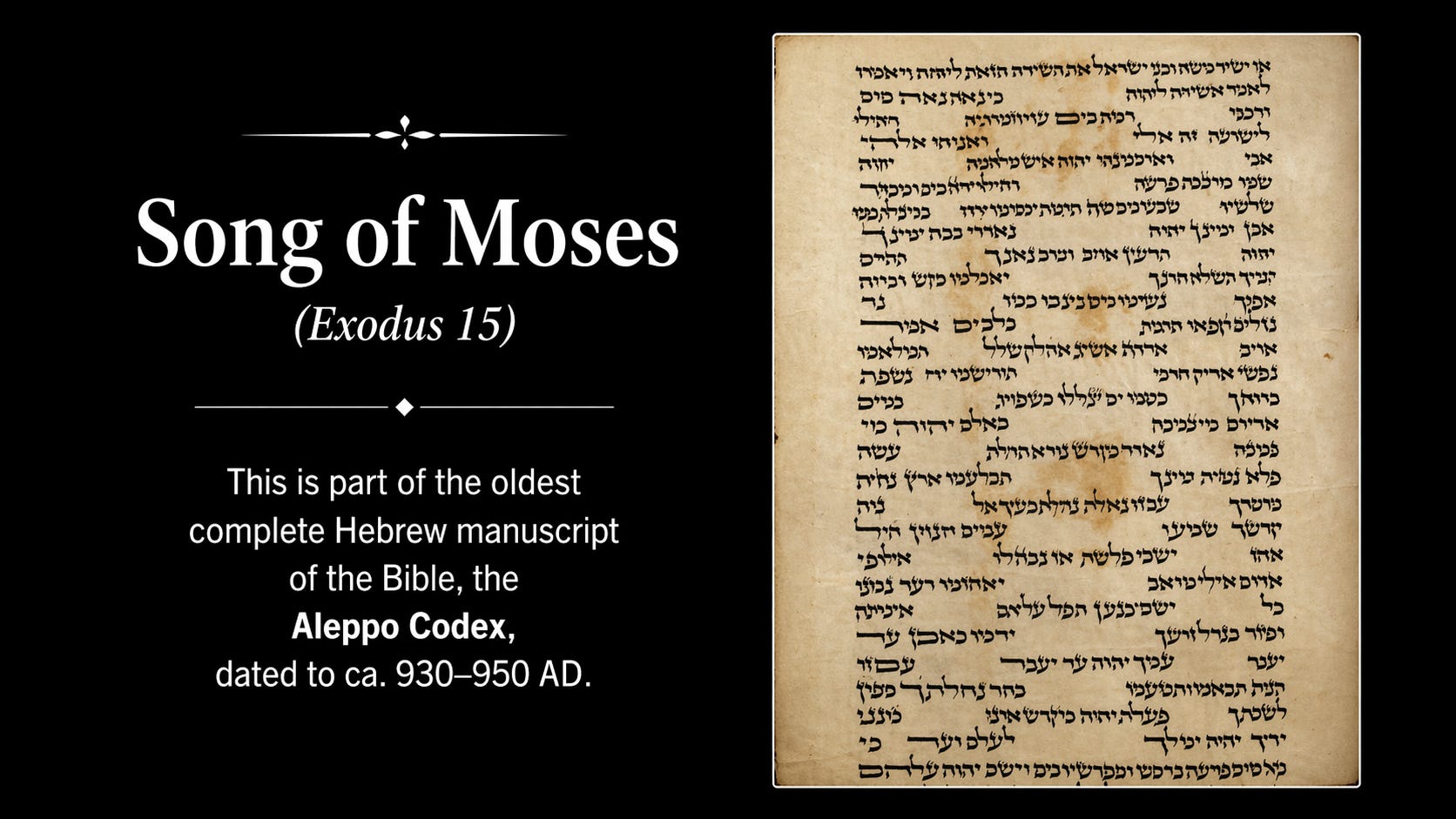
Free copying, by contrast, was not careless but adaptive. In this method, scribes made deliberate adjustments to aid contemporary readers’ comprehension. These changes were not intended to alter the substance of the text but to clarify it. For example, Genesis 14:14 refers to the city of Dan, though the location was originally known as Laish until the period of the Judges. A scribe, recognizing that later readers would be unfamiliar with the earlier name, updated it to reflect its more commonly known designation. The goal was intelligibility, not innovation.
Taken together, these methods served complementary purposes. Conservative copying preserved the exact wording of the text. Free copying preserved its intelligibility across time. Ancient Israel spanned many centuries, roughly from Moses to the coming of Christ. Over that period, culture, geography, and even language developed. The adaptive method ensured that the text remained accessible to successive generations.
This principle remains relevant. Faithfulness to Scripture does not require the preservation of language forms that obscure meaning. The goal is not merely to possess the text but to understand it.
The Masoretic Tradition
Following the destruction of Jerusalem in AD 70, the conservative method of copying became the dominant approach to transmitting the Old Testament. As the historical timeline advances, particular attention must be given to a group of Jewish scholars in the Middle Ages known as the Masoretes. Active from approximately the sixth through the tenth centuries, these men approached the copying of Scripture with extraordinary care and precision. The text they produced became standardized and remains the basis of the Hebrew Bible to this day. Moreover, it serves as the foundational text for nearly all modern translations of the Old Testament, whether in English or other languages.
Their level of care is difficult to overstate. A manuscript containing even a single error was deemed unfit for public use. If a scribe accidentally omitted a line, it could not simply be inserted between existing lines. Instead, an adjacent line had to be erased so that the missing content could be properly rewritten within the structure of the text. When copying the divine name, Yahweh, the scribe was not permitted to pause under any circumstance. Even the presence of a king did not justify interruption. The act of writing the name of God demanded uninterrupted attention, reflecting the profound reverence with which they approached their task.
In addition to their meticulous copying practices, the Masoretes contributed significantly to the preservation of the Hebrew language itself by developing vowel pointing. The original Hebrew text consisted only of consonants. While this posed no difficulty for native readers in earlier periods, linguistic changes over time made accurate reading increasingly challenging. Following the Roman conquest of Jerusalem, even those who could read Hebrew began to lose familiarity with its ancient forms.
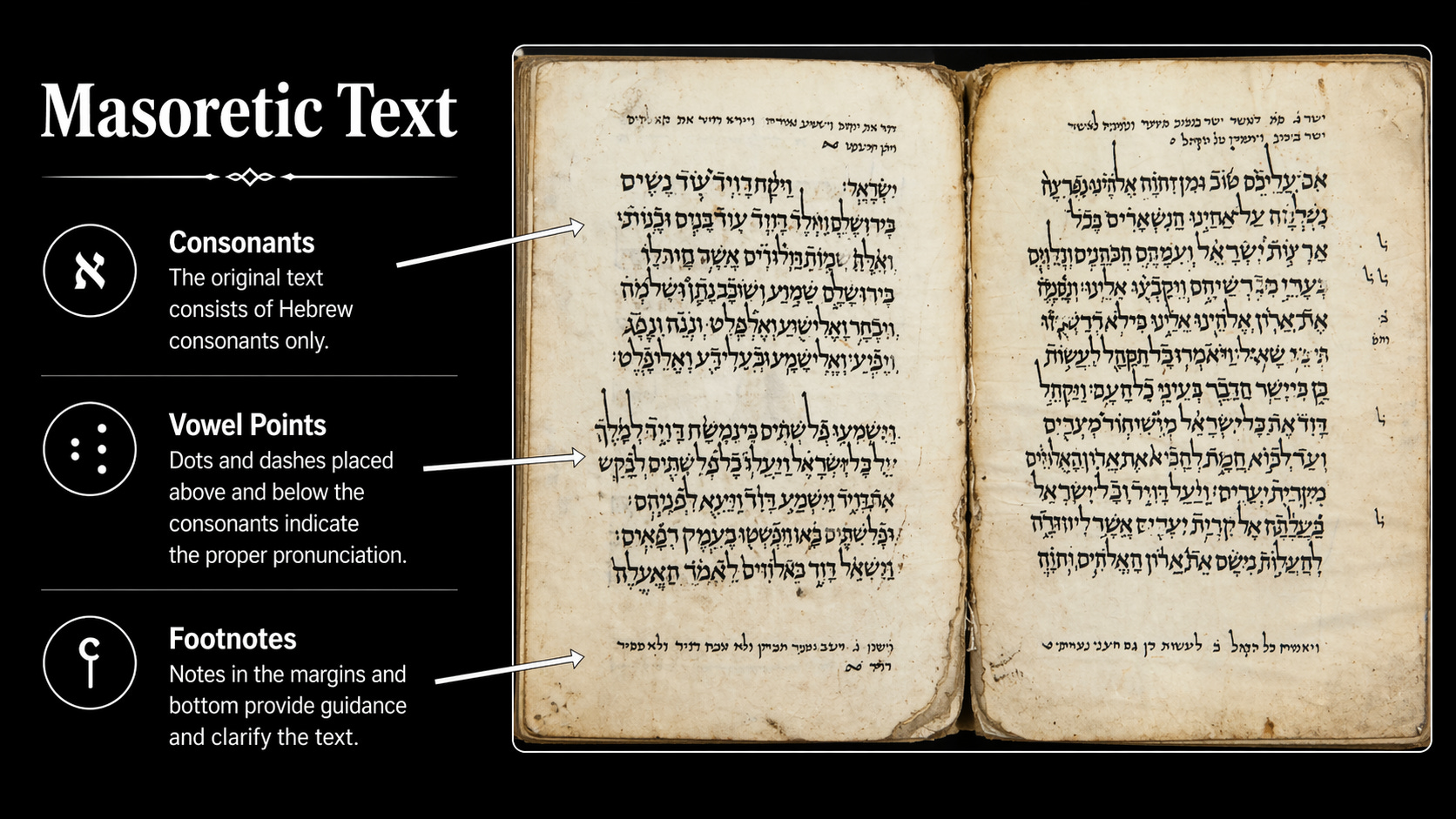
To address this, the Masoretes devised a system of vowel points consisting of dots and dashes placed above and below the consonantal text. These markings indicated proper pronunciation without altering the original letters. Their intention was to avoid modification of the text while preserving its correct reading. By maintaining the consonantal structure while supplementing it with vocalization guides, they ensured that the language of the Old Testament remained accessible to future generations.
Their commitment to textual accuracy extended even further. The Masoretes included detailed marginal notes, recording the frequency of words and other textual features. These annotations functioned as an additional safeguard, enabling scribes to verify the precision of their copies. Through such measures, they demonstrated an exceptional dedication to preserving the integrity of the biblical text.
The Dead Sea Scrolls and Textual Confirmation
This raises a significant question: How can it be known that the manuscripts copied so carefully by the Masoretes were themselves accurate? Their methodology is undeniably impressive, yet the Masoretic Text stands roughly a thousand years removed from the time of the apostles. That span invites scrutiny. Moreover, when it comes to Hebrew manuscripts, very few survive from the period between the destruction of Jerusalem in AD 70 and the emergence of the Masoretic tradition. The most complete Masoretic manuscript currently available dates to AD 1008.
A major development occurred in 1947. In that year, shepherds in the region of the West Bank, near the area where David once hid while fleeing from Saul, were searching for a lost sheep. One of them threw a stone into an opening in a cliff and heard the sound of breaking pottery. Further investigation led them to a cave, where they discovered clay jars containing ancient scrolls. These manuscripts came to be known as the Dead Sea Scrolls.
Subsequent examination revealed that these scrolls included portions of every book of the Hebrew Old Testament except Esther. Additional materials were also present, such as a verse-by-verse commentary on Habakkuk. The most significant discovery, however, was the collection of biblical manuscripts themselves. These texts were dated to approximately 200-100 BC. In other words, they predate the coming of Christ and are more than a thousand years earlier than the Masoretic manuscripts.
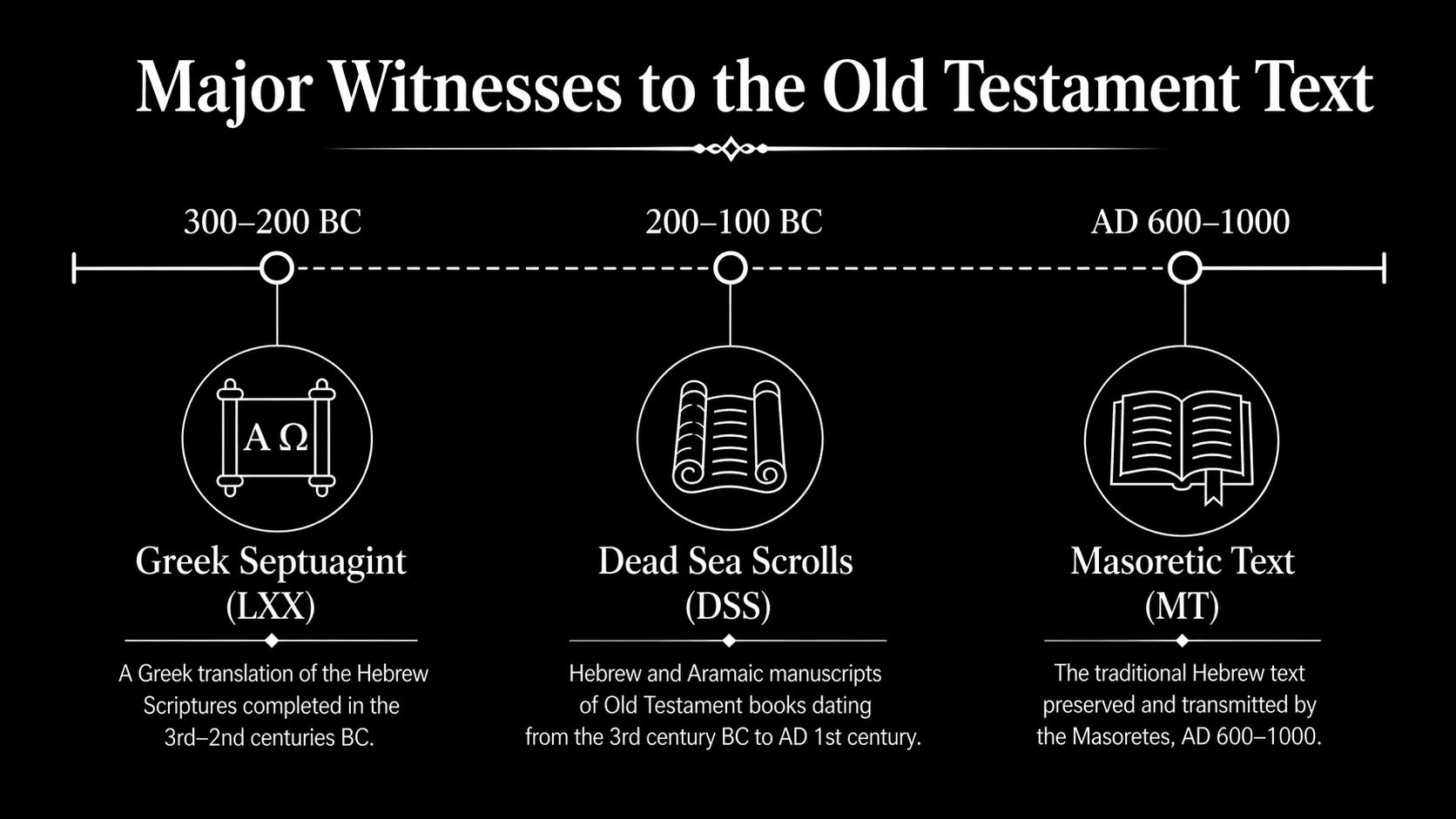
This discovery provided an unprecedented opportunity for comparison. With the Masoretic Text on one hand and the Dead Sea Scrolls on the other, it became possible to examine how the Hebrew text had been transmitted over the course of a millennium. The results were striking.
The Hebrew Old Testament contains roughly 305,000 words. Of these, only about one percent show any variation across that thousand-year span. Even within that small percentage, the vast majority of differences are minor and easily recognizable, such as spelling variations or simple copying errors. These are the kinds of discrepancies that can often be identified through context alone.
The remaining variations, few as they are, do not alter any central doctrine of the Christian faith. They do not affect the understanding of God, the person and work of Christ, or the nature of salvation. The essential message of the text remains unchanged. Over a thousand years of manual transmission, the stability of the Hebrew Scriptures is remarkably evident.
A Case Study in Textual Variation: Goliath’s Height
Examples of textual variation help illustrate how these differences appear within the manuscript tradition. A textual variant refers to any difference between existing copies of the biblical text. One of the most well-known examples in the Old Testament occurs in 1 Samuel 17, in the account of David and Goliath. The question concerns Goliath’s height.
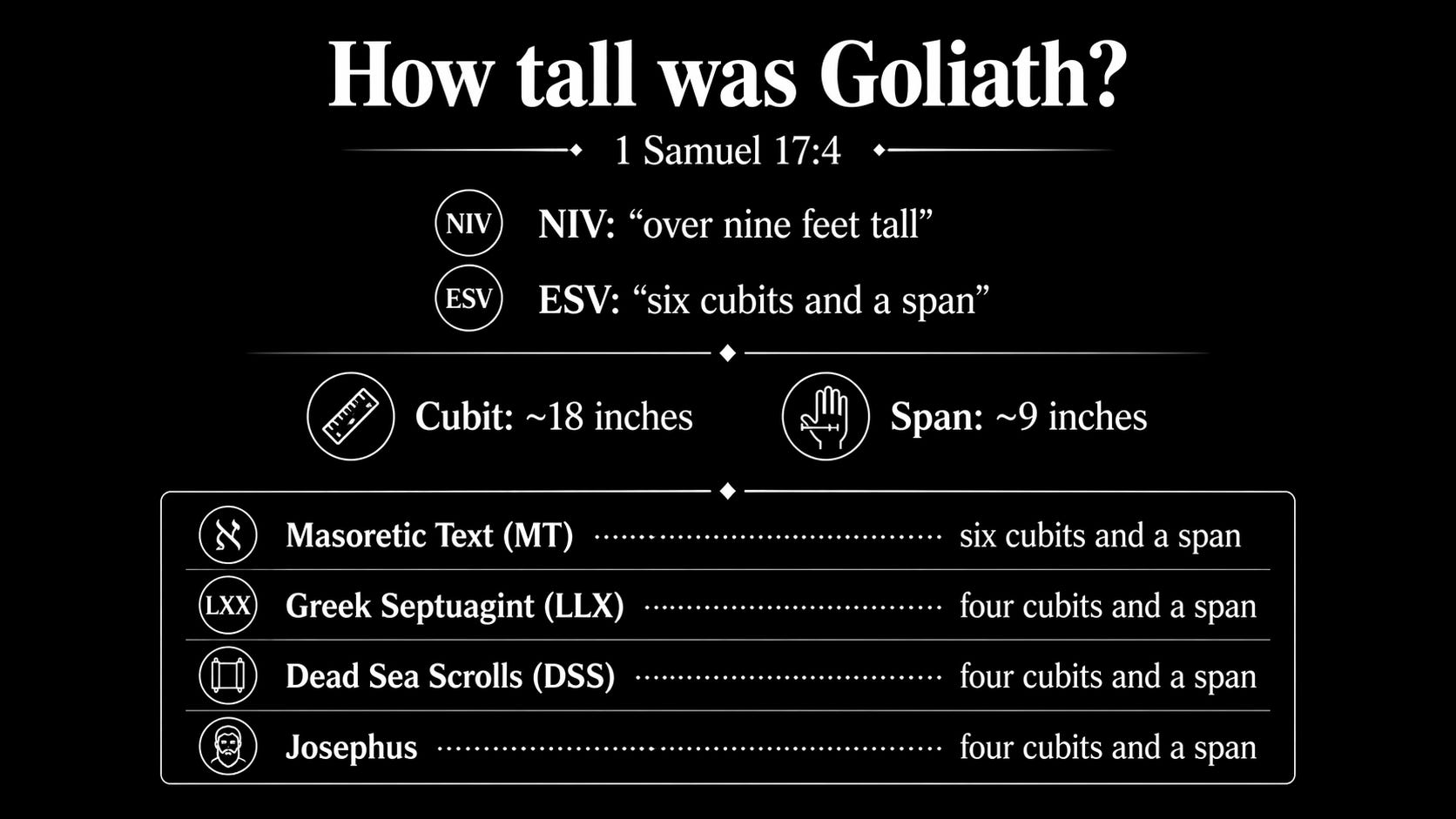
Some translations, such as the NIV, render his height as “over nine feet tall,” often with a footnote indicating that the Hebrew text reads “six cubits and a span.” These ancient units of measurement are unfamiliar to modern readers. A cubit is roughly the distance from the elbow to the tip of the finger, about eighteen inches, and a span is approximately nine inches. Taken together, six cubits and a span would place Goliath at around nine feet, nine inches.
The ESV retains the Hebrew expression in the main text, stating that “his height was six cubits and a span,” while providing a modern equivalent in a footnote. It also includes an additional note indicating a textual variant: “Hebrew; Septuagint, Dead Sea Scrolls, and Josephus four.” This notation introduces the discipline of textual criticism.
Textual criticism involves the comparison of existing manuscripts in order to identify variations and determine, as closely as possible, the original wording of the text. Scholars gather available manuscripts, evaluate their differences, consider their dates and origins, and weigh the evidence. Manuscripts in the original language are often given priority, since they can be copied directly, though early translations are also highly valuable, especially when they reflect older textual traditions. In general, earlier manuscripts and those closest to the original language are given greater weight.
In this instance, the ESV’s reference to “Hebrew” indicates reliance on the Masoretic Text. However, the footnote identifies alternative readings preserved in other significant sources. These include the Greek Septuagint, the Dead Sea Scrolls, and the writings of the first-century Jewish historian Josephus. Each of these sources indicates that Goliath’s height was “four cubits and a span,” which would be approximately six feet, nine inches.
The Septuagint, a Greek translation of the Old Testament produced in the third to second centuries BC, holds considerable importance. It was widely used among Jews living outside Israel who no longer spoke Hebrew fluently. It was also the version frequently cited by Christ and the apostles. While estimates vary, it is often suggested that a substantial portion of Old Testament quotations in the New Testament align with the Septuagint. In some instances, these quotations reflect readings that differ slightly from the Hebrew text, though without affecting doctrinal content.
The Dead Sea Scrolls provide further support for this alternate reading. Hebrew manuscripts predating the time of Christ offer an early witness to the textual tradition and likewise record Goliath’s height as four cubits and a span. In addition, Josephus, writing in the first century, describes Goliath using the same measurement.
The use of such extra-biblical sources is not unusual in textual criticism. Writings from outside the biblical canon can provide valuable insight into the textual tradition. If a particular reading appears in later manuscripts but is absent from earlier ones, it becomes necessary to consider whether earlier witnesses have been lost or whether the reading was introduced at a later stage. Citations in sermons, commentaries, and historical writings can help establish whether a reading was known and used in earlier periods.
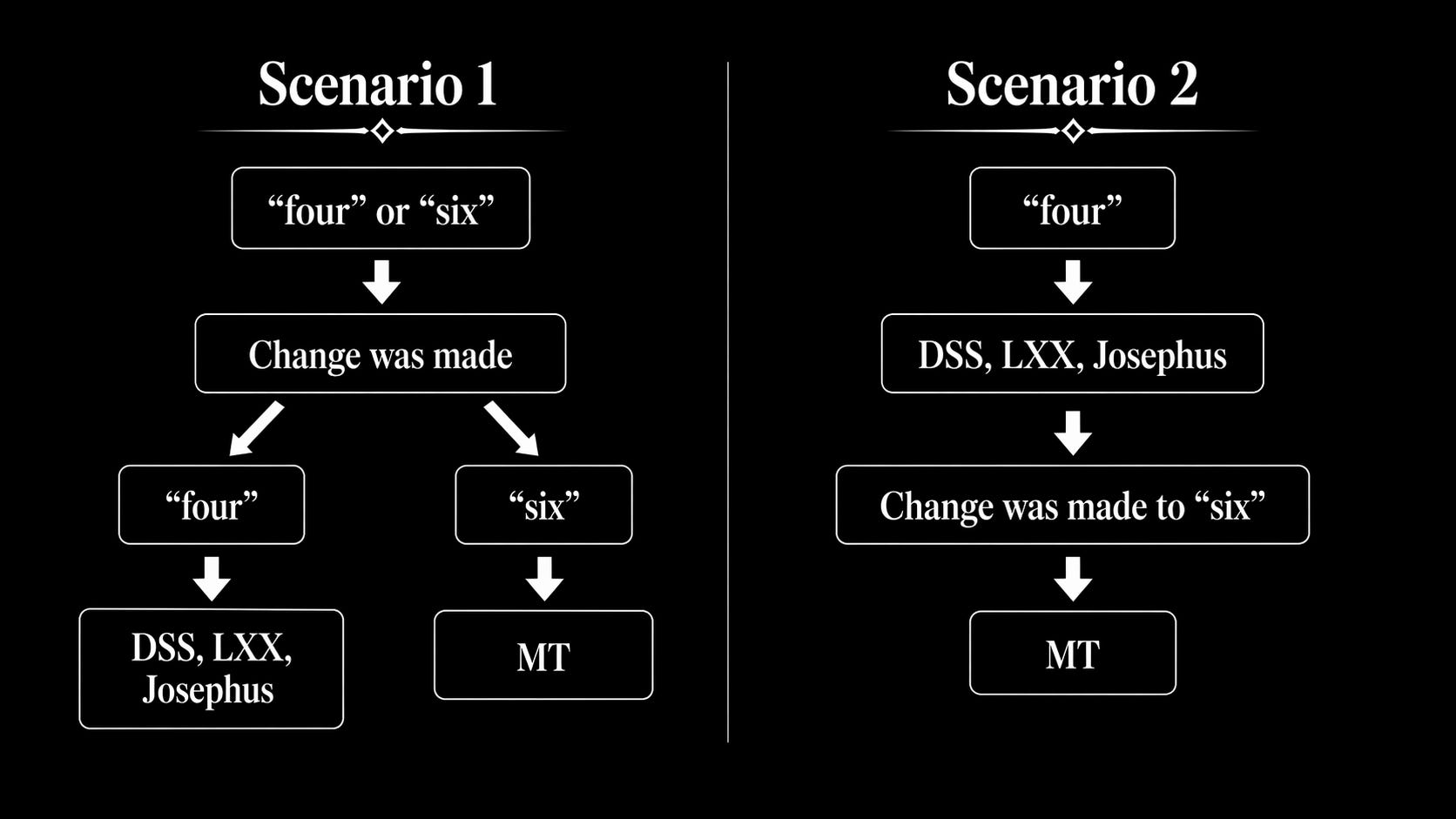
In the case of Goliath’s height, the available evidence presents two plausible scenarios. The variation may have arisen prior to the composition of the Dead Sea Scrolls and the Septuagint, resulting in two distinct streams of transmission. One preserved the reading of six cubits and a span, while the other preserved four cubits and a span. Alternatively, the change may have occurred after the earlier witnesses, with the larger measurement emerging in a later stage of transmission. The precise origin of the variation cannot be determined with certainty.
Most modern English translations have chosen to follow the Masoretic Text, which gives the larger measurement. Despite this and other relatively minor variations, the overall reliability of the Masoretic tradition remains well established. Indeed, the very evidence that raises questions in isolated cases also, on a broader scale, confirms the remarkable stability of the Old Testament text.
Another Example: Psalm 145 and the Acrostic Pattern
A second example of textual variation appears in Psalm 145. This psalm is composed as an acrostic, meaning that each line corresponds to a successive letter of the Hebrew alphabet. In the Masoretic Text, however, one letter and its corresponding line are absent from the sequence. The pattern appears to skip a letter in the middle of the psalm.
The discovery of the Dead Sea Scrolls brought renewed attention to this omission. Among those manuscripts, the missing line is preserved. The same line is also found in the Greek Septuagint, as well as in at least one Masoretic manuscript. The verse reads, “The LORD is faithful in all his words and kind in all his works” (Psalm 145:13).
While the majority of Masoretic manuscripts do not include this line, many modern English translations have restored it on the basis of this broader manuscript evidence. The ESV, for example, includes the verse in brackets, indicating that it is supported by important witnesses outside the primary Masoretic tradition. The presence of even a single Masoretic manuscript containing the line may have contributed to this decision.
This example illustrates an important principle. Although modern translations generally prioritize the Masoretic Text due to its demonstrated accuracy and the care with which it was transmitted, they do not rely on it exclusively. Translators weigh all available evidence, including early Hebrew manuscripts, ancient translations, and other textual witnesses. When uncertainty remains, the Masoretic reading is typically given preference, but it is not followed uncritically.
It is essential to maintain perspective. Again, variations like this account for a very small percentage of the overall text. The Hebrew Old Testament, consisting of approximately 305,000 words, exhibits only about one percent variation across the manuscript tradition. The overwhelming majority of these differences are minor, often involving spelling or other easily recognized discrepancies.
The presence of such variations should not be overstated. Human involvement in the copying process inevitably introduced small errors, yet the text has been preserved with remarkable fidelity. Even across centuries of transmission, no significant corruption of the message has occurred. The consistency of the text, despite the limitations of those who copied it, serves as a further indication of divine providence in its preservation.
With this foundation in place, attention can now turn to the transmission of the New Testament.
The Transmission of the New Testament
In contrast to the Old Testament, the transmission of the New Testament unfolded under far less controlled conditions. Within the first century, the church spread rapidly across the known world, encompassing a wide range of ethnic groups and languages. There was no centralized authority overseeing the copying process. Churches in various regions desired copies of the New Testament, and the reproduction work was undertaken by both trained scribes and ordinary believers. These copies were produced in many locations and often under urgent circumstances. The demand was high, and there was also a practical concern to preserve the text in the face of persecution from both Jewish and Gentile authorities. By multiplying copies and dispersing them widely, the early church ensured that the text could not be easily destroyed.
This environment resulted in two notable outcomes. First, there is less uniformity among New Testament manuscripts, resulting in more textual variants. Second, there is a far greater quantity of manuscripts available for comparison. This abundance of evidence strengthens the work of textual criticism, as patterns across manuscripts can be examined to determine the most likely original readings.
Rather than preserving a single, flawless line of transmission, God preserved the New Testament through a vast and diverse manuscript tradition. Thousands of copies were produced within a relatively short period and distributed across a wide geographical area. Even during periods of intense opposition, the text endured because it existed in too many places to be eradicated.
In the study of New Testament textual criticism, three primary sources of evidence are considered. First, scholars examine manuscripts in the original Greek, the language in which the New Testament was written. Second, they study early translations, since the text was quickly rendered into multiple languages as the gospel spread. Third, they consult early Christian writings, including letters, sermons, and commentaries, many of which contain extensive quotations of Scripture. The writings of the early church fathers alone preserve a vast number of New Testament citations, sufficient to reconstruct nearly the entire text even if the manuscripts themselves were lost.
This combined body of material is referred to as manuscript evidence. In terms of Greek manuscripts alone, approximately 5,800 copies of the New Testament are known today. The earliest of these date to the second century, only a few decades removed from the original writings. While many of these early witnesses are fragmentary, they nonetheless provide valuable confirmation of the text’s early form.
Compared with other ancient Greek literature, the New Testament stands in a category of its own. Homer’s Iliad, often cited as the next best-attested work, survives in approximately 1,800 manuscripts, with the earliest copies dating about five hundred years after its composition. The works of Plato exist in roughly 250 manuscripts, with a similar chronological gap. Aristotle’s writings are preserved in fewer than one hundred manuscripts, and the earliest copies appear more than twelve hundred years after the originals. Despite these gaps, the authenticity of these works is rarely questioned.
By contrast, the New Testament benefits from both a far greater number of manuscripts and a much shorter interval between the originals and the earliest copies. This combination provides a strong foundation for confidence in the text. By the second century, collections of Paul’s letters were already being compiled in codex form. By the fourth century, complete copies of the Bible, containing both Old and New Testaments, were being produced.
The abundance of manuscripts raises an important question: Does having more copies truly aid in determining the original text? The answer is yes. A single manuscript offers no means of detecting error. However, when manuscripts from different regions and time periods are compared, variations can be analyzed, and patterns begin to emerge. These patterns enable scholars to identify and correct copying mistakes, bringing the reconstructed text into closer alignment with the original autographs.
This process will be illustrated further with specific examples as the discussion continues, particularly regarding the transmission and translation of the New Testament.


