

We continue our study of the doctrine of assurance as it is presented in chapter 18 of the 1689 Baptist Confession.
We have already made our way through the first paragraph, which shows us, first, that assurance does not belong to temporary believers and other unregenerate people. They may deceive themselves into believing they have assurance, but ultimately their hope will fail.
Second, the first paragraph shows us that assurance is possible for genuine believers. We are told, “Those who truly believe in the Lord Jesus and love Him sincerely, endeavoring to walk in all good conscience before Him, may be certainly assured in this life that they are in a state of grace.” Furthermore, “they may rejoice in the hope of the glory of God, and this hope will never make them ashamed.”
The Three Grounds of Christian Assurance
With that, we move to the second paragraph of chapter 18:
This certainty is not merely an inconclusive or likely persuasion based on a fallible hope. It is an infallible assurance of faith founded on the blood and righteousness of Christ revealed in the gospel. It is also built on the inward evidence of those graces of the Spirit about which promises are made. It is further based on the testimony of the Spirit of adoption, witnessing with our spirits that we are the children of God. As a fruit of this assurance, our hearts are kept both humble and holy.
Now that the Confession has shown us that assurance is possible, it explains how our assurance can be certain. It does so by giving us three grounds for this assurance.
First, our assurance is founded on the blood and righteousness of Christ revealed in the gospel. Second, it is built on the inward evidence of those graces of the Spirit about which promises are made. Third, it is based on the testimony of the Spirit of adoption, witnessing with our spirits that we are the children of God.
Today, we will consider just the first ground: the blood and righteousness of Christ.
Assurance Is Not a Guess
The paragraph begins, “This certainty is not merely an inconclusive or likely persuasion based on a fallible hope.”
Paragraph two begins by denying inadequate forms of confidence. Assurance is not inconclusive, nor is it merely likely persuasion.
In other words, it is not a guess. It is not the believer saying, “I guess I am saved,” or “I hope it turns out well,” or “I think I am probably saved.” Assurance is also not “likely persuasion based on a fallible hope.”
What does that mean?
Someone sent me a question after hearing last week’s lesson. He asked, “If only the one who perseveres to the end will be saved, how can one be assured of final salvation before the end?”
That is a fair question. Here is my answer to him:
The same God who promises salvation to those who persevere also promises to preserve them to the end. We are not assured because we have already finished the race, but because Christ has promised to finish what He started (Philippians 1:6). As Paul said, “I know whom I have believed” (2 Timothy 1:12), not merely, “I know what I will do tomorrow.”
That is the difference between what the Confession describes as fallible hope and infallible hope.
Persuasion based on fallible hope is dependent on human changeableness. It is someone calculating his spiritual odds. He looks inward at his own Christian performance, and though he may have assurance of salvation in the moment, he is also thinking, I may not have the same hope tomorrow.
What Makes Hope Infallible?
What, then, is infallible hope?
It does not mean the believer is personally infallible. It does not mean his introspection is infallible. His self-assessment may be too severe one moment and too generous the next. His feelings may rise and fall. His faith may be weak or strong.
No, it is not the believer who is infallible. It is the hope that is infallible. And what makes this hope unfailing? The short answer is God.
We are not assured because we have already finished the race or because we have that much confidence in ourselves, but because Christ has promised to finish what he started. The blood of Christ is sure. The righteousness of Christ is sure. The promise of God is sure.
This certainty of assurance can exist only because God is true, because Christ is sufficient, and because the gospel promise is firm.
This is why the Confession cites Hebrews 6:
For when God made a promise to Abraham, since he had no one greater by whom to swear, he swore by himself, saying, “Surely I will bless you and multiply you.” And thus Abraham, having patiently waited, obtained the promise. For people swear by something greater than themselves, and in all their disputes, an oath is final for confirmation. So when God desired to show more convincingly to the heirs of the promise the unchangeable character of his purpose, he guaranteed it with an oath, so that by two unchangeable things, in which it is impossible for God to lie, we who have fled for refuge might have strong encouragement to hold fast to the hope set before us. We have this as a sure and steadfast anchor of the soul, a hope that enters into the inner place behind the curtain, where Jesus has gone as a forerunner on our behalf, having become a high priest forever after the order of Melchizedek. (Hebrews 6:13-20)
Here we are told that God made a promise, and then he went even further by making an oath. Both are unchangeable because they are based on the character of God himself, who cannot lie. He cannot revoke his promise, and he cannot break his oath. His very nature will not allow it. Because of this, the author says, “We have this as a sure and steadfast anchor of the soul.”
Notice that this hope is not defined as a feeling or something we find within ourselves. It is presented as an objective reality outside of ourselves.
God made the promise to save. He made the oath. Jesus died and rose again. He ripped the veil of the temple in two. He gave his people entrance into the presence of God the Father. Because of this objective reality, “We have this as a sure and steadfast anchor of the soul.”
The Anchor Must Be Outside the Boat
Think about that imagery for a moment. Our hope is to be an anchor for the soul.
Think of a boat drifting wherever the wind and waves send it. The purpose of an anchor is to keep the boat fixed in one spot. But the way many people think about hope is the equivalent of taking that anchor and throwing it into the middle of the boat.
People often think of hope as, How do I feel about my salvation right now? Do I feel like I would go to heaven if I died today?
That is not biblical hope.
Yes, there is a place for self-examination, but an anchor does no good if it is inside the boat. The anchor functions only when fixed outside the boat. It has to latch onto solid ground beneath the water.
That solid ground is the promise of God fulfilled in Christ.
True assurance is not a guessing game. It is not wishful thinking. Ultimately, it is trusting in the promises of God, which leads us to the first ground of assurance according to the Confession: “It is an infallible assurance of faith founded on the blood and righteousness of Christ revealed in the gospel.”
Assurance Begins with the Objective Work of Christ
There are two other grounds of assurance mentioned in this paragraph, but I think the authors intentionally start with this one because it is objective. It is the anchor. It is outside the believer’s subjective experience.
The blood of Jesus does not fluctuate with the believer’s mood. His righteousness does not become more complete on days when a believer feels strong or less complete on days when he feels weak. No matter how we feel or what we go through, Christ has died. Christ has obeyed. Christ has risen. Christ has ascended. Christ intercedes for us. Christ saves those who come to God through him. These are absolute realities before they are the personal, inward experiences of those he saves.
Think of the way Paul defines the gospel at the start of 1 Corinthians 15:
Now I would remind you, brothers, of the gospel I preached to you, which you received, in which you stand, and by which you are being saved, if you hold fast to the word I preached to you—unless you believed in vain.
For I delivered to you as of first importance what I also received: that Christ died for our sins in accordance with the Scriptures, that he was buried, that he was raised on the third day in accordance with the Scriptures. (1 Corinthians 15:1-4)
The gospel that saves us is the objective historical reality that Jesus Christ died, was buried, and was raised in fulfillment of Old Testament prophecy.
We see the same thing in Romans 5:
For while we were still weak, at the right time Christ died for the ungodly. For one will scarcely die for a righteous person—though perhaps for a good person one would dare even to die— but God shows his love for us in that while we were still sinners, Christ died for us. Since, therefore, we have now been justified by his blood, much more shall we be saved by him from the wrath of God. For if while we were enemies we were reconciled to God by the death of his Son, much more, now that we are reconciled, shall we be saved by his life. (Romans 5:6-10)
While the Confession does address inward evidences of salvation, we do not begin there. If the believer begins with himself, he will find many reasons to tremble. He will see his remaining sin. He will see mixed motives. He will see cold affection at times. He will see inconsistency. He will often see unbelief, pride, selfishness, cowardice, dullness in prayer, distraction in worship, and imperfection in obedience. That is certainly not an infallible hope.
But if assurance begins with the objective reality that Christ died for us, then we have solid ground for our anchor to latch onto.
We do not want to discount inward evidence altogether. It is important. But we have to put it in its proper place. The root produces fruit, and the fruit confirms the life of the root, but the fruit is not the root. Good works are evidence of a true and living faith, but they are not the righteousness by which we stand before God. Christ alone is our righteousness.
Paul says, “Christ Jesus … became to us wisdom from God, righteousness and sanctification and redemption, so that, as it is written, ‘Let the one who boasts, boast in the Lord’” (1 Corinthians 1:30).
When considering how we might have assurance of our salvation, we begin with Christ, as the Confession directs.
The Blood of Christ
What does the Confession mean by the blood of Christ?
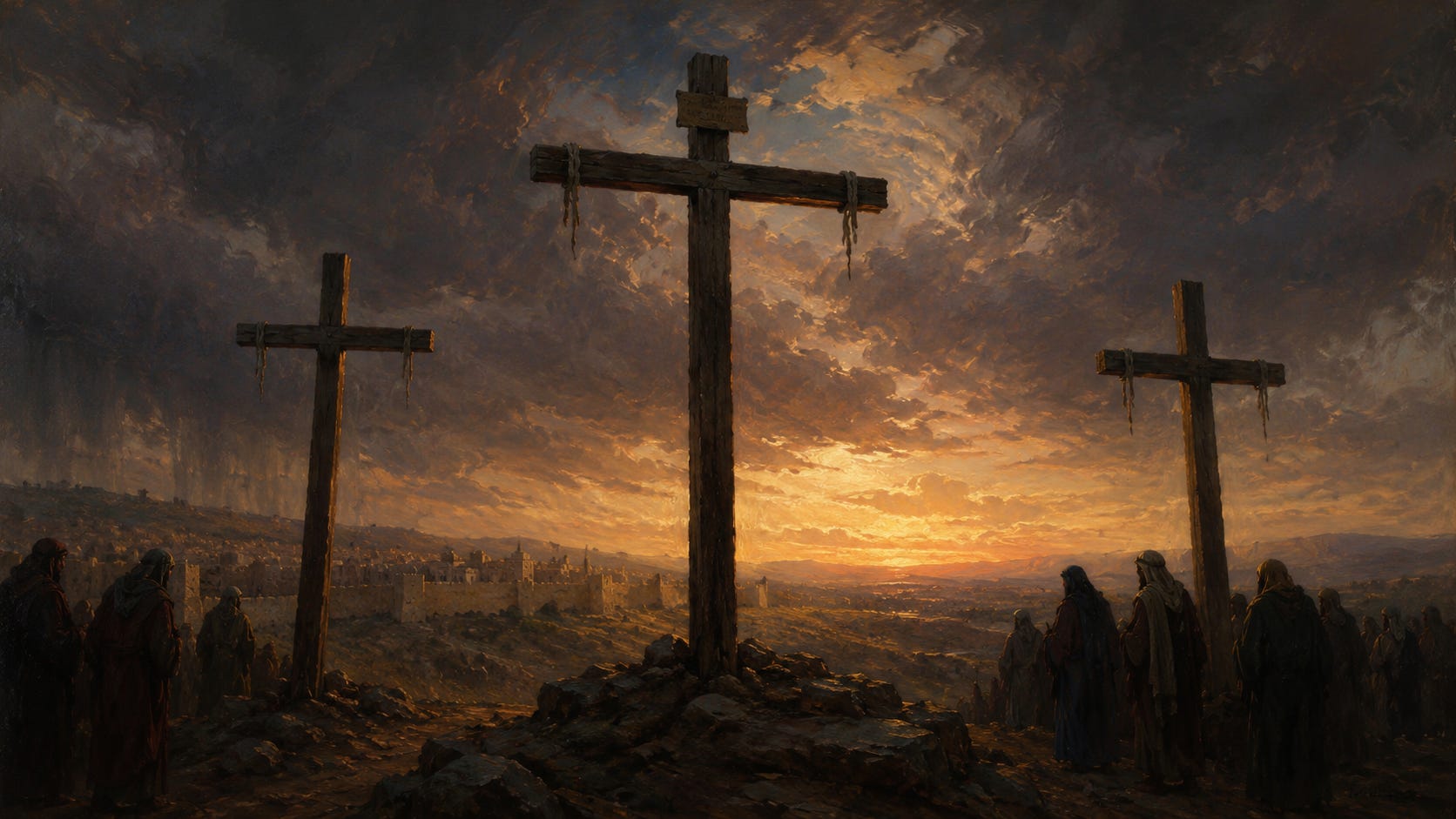
It refers to his sacrificial death. His atonement. His substitution. It means that Christ bore the curse of the law for his people. It means that he satisfied divine justice on the cross. It means that he secured forgiveness for sinners by his death.
In chapter 8, paragraph 4, the Confession says:
The Lord Jesus most willingly … experienced the punishment that we deserved and that we should have endured and suffered. He was made sin and a curse for us. He endured extremely heavy sorrows in His soul and extremely painful sufferings in His body. He was crucified and died and remained in a state of death, yet His body did not decay. On the third day, He arose from the dead with the same body in which He suffered.
From beginning to end, the Bible teaches that sin brings guilt before a holy God, and that guilt requires atonement.
In Genesis 2:17, God warned Adam that disobedience would bring death. Then in Genesis 3, Adam sinned. Shame entered the picture. Guilt entered. Death entered. Sinners hid themselves from God.
Jump ahead to Exodus 12, and the blood of the Passover lamb marked the houses of Israel, so that judgment would pass over them. In Leviticus 17:11, the Lord says, “For the life of the flesh is in the blood, and I have given it for you on the altar to make atonement for your souls.”
Then in Isaiah 53, we are shown how the Savior to come would be wounded for our transgressions, bruised for our iniquities, and would bear the sins of many.
The whole Old Testament is preparing us for the cross. It is preparing us for the death of Jesus, who would make atonement for our sins.
When we come to the New Testament and John the Baptist sees Jesus approaching, what does he say? “Behold, the Lamb of God, who takes away the sin of the world!” (John 1:29). What is John saying there? He is gathering up the Old Testament sacrificial system and all its allusions to a final, permanent atonement and combining them into this one title for Christ: the Lamb of God. He is the true and final Passover Lamb.
Paul says it explicitly: “For Christ, our Passover lamb, has been sacrificed” (1 Corinthians 5:7). Peter says, “You were ransomed … with the precious blood of Christ, like that of a lamb without blemish or spot” (1 Peter 1:18–19). And the apostle John writes, “The blood of Jesus his Son cleanses us from all sin” (1 John 1:7).
Perhaps Romans 3 is the clearest of all:
For all have sinned and fall short of the glory of God, and are justified by his grace as a gift, through the redemption that is in Christ Jesus, whom God put forward as a propitiation by his blood, to be received by faith. This was to show God’s righteousness, because in his divine forbearance, he had passed over former sins. It was to show his righteousness at the present time, so that he might be just and the justifier of the one who has faith in Jesus. (Romans 3:23-26)
Clearly, God is not issuing pardons to sinners based on sentimentality. He is not overlooking anyone’s sins. God is a just God, so he must carry out justice. He must punish our sins. The good news of the gospel is that Christ died in our place. Justice has not been bypassed. It has been satisfied. The debt was not ignored. The debt was paid.
According to Hebrews 9:
When Christ appeared as a high priest of the good things that have come, then through the greater and more perfect tent (not made with hands, that is, not of this creation) he entered once for all into the holy places, not by means of the blood of goats and calves but by means of his own blood, thus securing an eternal redemption. For if the blood of goats and bulls, and the sprinkling of defiled persons with the ashes of a heifer, sanctify for the purification of the flesh, how much more will the blood of Christ, who through the eternal Spirit offered himself without blemish to God, purify our conscience from dead works to serve the living God.
Therefore, he is the mediator of a new covenant, so that those who are called may receive the promised eternal inheritance, since a death has occurred that redeems them from the transgressions committed under the first covenant. (Hebrews 9:11-15)
Hebrews 10:14 adds, “For by a single offering he has perfected for all time those who are being sanctified.” For all time. Forever.
The death of Jesus was not a sacrifice that temporarily appeased God. It was not a partial atonement. It does not need to be repeated over and over because it is somehow insufficient. When Jesus said, “It is finished,” he meant what he said.
So when the conscience says, “You have sinned against God,” we do not respond by denying the charge. We do not reply, “Maybe so, but my sins are not that serious.” And we do not answer, “Yes, but my future obedience and good works will compensate for it.” No, the best and only response is this: Christ has died. He made atonement by his blood, becoming the justifier of the one who has faith in him.
The Righteousness of Christ
The Confession also points to the righteousness of Christ, not only his blood or his death. That is because, in addition to the pardon we need, we also need positive righteousness before God.
The problem is that the sinner does not have his own righteousness. Isaiah 64:6 says, “We have all become like one who is unclean, and all our righteous deeds are like a polluted garment,” or “filthy rags,” as the King James Version renders it.
In Philippians 3, Paul renounces any confidence he might have in his own righteousness:
Indeed, I count everything as loss because of the surpassing worth of knowing Christ Jesus my Lord. For his sake, I have suffered the loss of all things and count them as rubbish, in order that I may gain Christ and be found in him, not having a righteousness of my own that comes from the law, but that which comes through faith in Christ, the righteousness from God that depends on faith. (Philippians 3:8-9)
If a sinner is to stand before God, he will need the righteousness of Christ because only Christ was fully and perfectly obedient to the law of God. According to Galatians 4, he was born under the law to redeem those under the law. At his baptism, when John the Baptist essentially asked why he needed to be baptized, he said it was to fulfill all righteousness.
When he went into the wilderness to be tempted by the devil for forty days, we see him obeying where both Adam and, later, Israel failed to do so. Throughout his entire life, he loved the Father with all his heart, soul, mind, and strength. He loved his neighbor perfectly. Hebrews 4:15 says he was tempted in all points, just as we are, yet he did not sin. He obeyed the will of God all the way through his death on the cross.
That is precisely why God could accept his sacrifice. If he had been guilty himself, he would have had his own sins to pay for, so he never could have paid for ours. But he was perfectly innocent. He was altogether righteous. Because he was, God did accept the atonement he made.
More to the point, God accepts those who are united to Christ by faith. Second Corinthians 5:21 says, “For our sake he made him to be sin who knew no sin, so that in him we might become the righteousness of God.”
If God accepts the sinner, it is not because of the sinner’s righteousness. It is not because of his good works, the intensity of his repentance, or the warmth of his affections. The sinner is accepted for Christ’s sake.
Listen to what Paul says in Romans 4:
To the one who does not work but believes in him who justifies the ungodly, his faith is counted as righteousness, just as David also speaks of the blessing of the one to whom God counts righteousness apart from works:
“Blessed are those whose lawless deeds are forgiven,
and whose sins are covered;
blessed is the man against whom the Lord will not count his sin.” (Romans 4:5-8)
To be clear, this is not a situation where the sinner’s righteousness carries him so far, but we still need Christ’s righteousness to take us the rest of the way. And it is not a situation in which Christ gives us his righteousness so that we become perfectly obedient as he was, and that is why God accepts us.
This is why we refer to the transaction between Christ and believers as imputation. Christ’s righteousness is imputed to the believer, which means God legally credits Christ’s perfect obedience and righteousness to the believer’s account. This transaction takes place through faith, which is why Paul says, “His faith is counted as righteousness.” The sinner comes to Christ empty-handed by faith, and the righteousness of Christ is credited to his account.
That is why, you will notice, this “infallible assurance” is, according to the Confession, “of faith.” Faith connects our personal experience to the objective reality of “the blood and righteousness of Christ revealed in the gospel.”
That is why Paul, in Romans 3, says we are “justified by his grace as a gift, through the redemption that is in Christ Jesus,” which is “to be received by faith” (Romans 3:24–25).
Revealed in the Gospel
What about that phrase “revealed in the gospel”?
We all know that the life and death of Christ are revealed in the gospel, but why did the authors of the Confession feel the need to include this phrase?
They are making it clear that personal assurance is not founded on hidden knowledge. We do not need some kind of private prophecy in order to have confidence in our salvation. This is really an allusion to what the next paragraph clarifies when it says believers “may attain this assurance … without any extraordinary revelation.”
You do not have to be an apostle or some level of elite Christian in order to know you are saved. The first, most important, objective ground of our assurance—the blood and righteousness of Christ—is revealed plainly to all in the gospel.
This is why Romans 1 says:
For I am not ashamed of the gospel, for it is the power of God for salvation to everyone who believes, to the Jew first and also to the Greek. For in it the righteousness of God is revealed from faith for faith, as it is written, “The righteous shall live by faith.” (Romans 1:16-17)
In 2 Timothy 3:15, Paul says, “The sacred writings [the Scriptures] … are able to make you wise for salvation through faith in Christ Jesus.”
As John nears the end of his Gospel, he says, “These are written [things about Jesus] so that you may believe that Jesus is the Christ, the Son of God” (John 20:31).
In Deuteronomy 29, we are told, “The secret things belong to the LORD our God” (Deuteronomy 29:29). There are things God does not reveal. However, the verse goes on to say, “But the things that are revealed belong to us and to our children forever.” According to the New Testament, the salvation and hope offered and secured by Christ are the very heart of those revealed things.
The Gospel Is Not Hidden
If we stepped back in Baptist history into the middle of the eighteenth century in England, we would find many Baptists who suggested that the gospel was essentially a secret or hidden thing. They said it is not for everyone and should be reserved only for the elect of God.
That is a bit of a problem because we do not know who the elect are. We are not privy to the names written in the Book of Life. The elect do not have a big E stamped on their foreheads. Even so, the response of these Baptists was to say, “Well, we wait until we see some evidence that they are elect, and then we will preach the gospel to them.”
You can probably see how backward that is. They treated a secret thing of God—knowing who the elect are—as a revealed thing, and a revealed thing—the invitation of the gospel—as a secret thing.
That is not how the Bible presents it. Instead, the Bible shows us that the gospel is very much revealed and should be preached as openly and widely as possible.
In Acts 17:30, God commands all people everywhere to repent. In Acts 13, Paul preaches very indiscriminately:
Let it be known to you, therefore, brothers, that through this man [Jesus] forgiveness of sins is proclaimed to you, and by him everyone who believes is freed from everything from which you could not be freed by the law of Moses. (Acts 13:38-39)
In John 6, Jesus himself says, “Whoever comes to me I will never cast out. … Truly, truly, I say to you, whoever believes has eternal life” (John 6:37, 47).
And what does John say at the end of his first epistle? “I write these things to you who believe in the name of the Son of God, that you may know that you have eternal life” (1 John 5:13).
So neither the gospel itself nor the assurance that can be gained from it is hidden. John does not say, “These things have I hidden from you until you receive a private revelation.” He says, “I write these things that you may know you have eternal life.”
Revelation serves assurance.
Assurance and Introspective Legalism
If we think carefully about this first ground, we realize that it protects against a potential problem: introspective legalism.
When we think about assurance, it seems natural to ask ourselves questions like:
Have I done enough?
Have I obeyed well enough?
Have I repented enough?
Have I mourned over my sin enough?
Have I loved enough?
Is my faith strong enough?
We can address those questions. In fact, we will address those questions. But those are not the first questions we should ask.
Here is a better list of questions:
What has Christ done?
Has Christ obeyed?
Has Christ died in my place?
Has Christ risen again?
Has Christ entered the heavenly sanctuary?
Is Christ interceding for me?
Has Christ promised to receive those who come to him?
Has Christ satisfied divine justice?
Has Christ accomplished perfect righteousness?
Has Christ been accepted by the Father?
Has Christ been given as Mediator, Priest, King, and Savior?
As we discussed last time, our faith, love, and obedience matter. But first and foremost, we should go back to the foundation of salvation itself.
We need to keep things in order. It is Christ who saves. The evidence in our lives will confirm it, and spiritual fruit will support our assurance, but Christ is the first and objective ground of our assurance.
Assurance and Presumption
The Confession also protects against a form of presumption.
If the Confession left it here with this first ground of assurance, someone might object, “If assurance rests only on Christ, will that not make people careless about sanctification and holiness?” It very well might. It should not, but it might.
Of course, this is not the end of the chapter, and we will come to the rest soon enough.
In conclusion, let me make a handful of brief applications.
First, before we ask, “Do I feel saved?” we should ask, “What has God revealed in the gospel concerning Christ?” Our emotions are unstable, but Christ remains the same yesterday, today, and forever.
Second, before we ask, “Do I see enough grace in my life?” we should ask, “Am I receiving and resting upon Christ?” We should not search for signs of life while simultaneously turning away from the life-giving Savior.
Third, before we ask, “Was my conversion experience clear enough?” we should ask, “Do I now believe in Christ?” Memories of our conversion may encourage us, but they are no substitute for present, ongoing faith.
Fourth, before we ask, “Have I done enough?” we should ask, “Has Christ done enough?” That is the central question. And the gospel’s answer is yes. It is finished.
Fifth, self-examination is good, but never do it without also looking to Christ. Self-examination detached from Christ will quickly become either pride or despair.
Sixth, the answer to any accusation you feel within—when the conscience says, “You are guilty,” or “You have not obeyed perfectly,” or Satan whispers, “You will be condemned”—is always Christ.
The answer is not, “I was converted on this date in history,” or “I have been a Christian for twenty years.” The answer is found in what the gospel reveals:
If God is for us, who can be against us? He who did not spare his own Son but gave him up for us all, how will he not also with him graciously give us all things? Who shall bring any charge against God’s elect? It is God who justifies. Who is to condemn? Christ Jesus is the one who died—more than that, who was raised—who is at the right hand of God, who indeed is interceding for us. (Romans 8:31-34)
Last of all, we do not want to separate what God has joined together. Christ is the foundation. Graces are evidence. The Spirit is a witness.
If the first ground is denied, assurance turns legalistic. If the second ground is denied, assurance becomes presumptuous and detached from holiness. If the third ground is denied, assurance becomes purely rationalistic and neglects the living work of the Spirit in our lives.
Keep them in order, but hold all three together.


